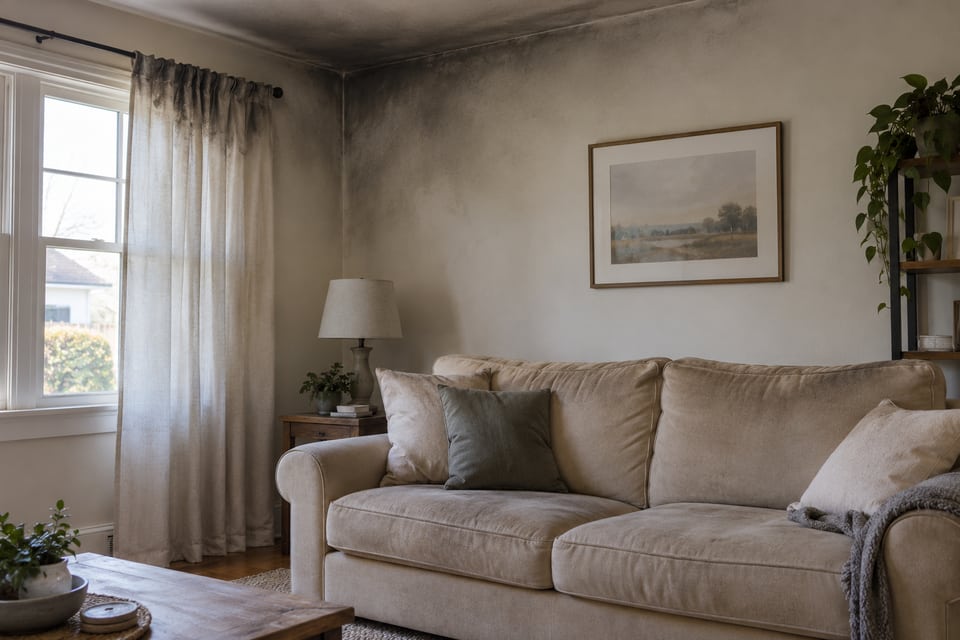
What should I record when smoke odor seems to come and go?
Write down where the odor is noticed, when it returns and what was happening at that time. Share existing observations instead of deliberately running equipment or entering restricted rooms to recreate the smell. The record helps frame a review. It does not name the source or establish that the air is safe.
What to establish first
An intermittent smell can lead to a vague request to deodorize everything. A more useful starting point is a simple room list: where the odor was first noticed, where it is strongest now, and which belongings have already been moved or cleaned. Keep what you saw or smelled separate from guesses about the cause.
Include changes since the fire, such as new cleaning products, removed materials or work in another room. That history can prevent a review from treating every smell as the same problem. Leave the area if symptoms or a hazard arise. Get medical help for symptoms or call 911 for immediate danger. Do not stay inside to test your exposure.
Agree the cleanup scope
Ask the written plan to name the suspected source areas and what must be inspected before a treatment is chosen. A plan should explain any planned removal, cleaning or ventilation work and its limits. A pleasant fragrance at the end of a visit is not an agreed acceptance criterion for an unresolved source.
If a device or chemical is planned, ask for its name and why it suits the job. Who must leave? What must happen before anyone returns? EPA warns that ozone can harm health. Do not operate an ozone device in an occupied room or use your sense of smell to decide that treatment conditions are safe.
- Which source areas need further investigation?
- What work must happen before deodorizing?
- How will unresolved odor be recorded at review?
Local checks and the next decision
The north mainland includes a separate local permitting path in St. Lucie Village as well as city and county address questions. If the plan expands, check the added tasks first. Opening walls, replacing parts or changing air systems may need a trade license and permits. Use the full address to find the right permit office.
Keep your first notes with the date. Agree how the result will be checked when work ends. When calling, explain whether an odor remains after earlier cleaning and whether any rooms or systems are still off limits. We can discuss the next request around those facts. An earlier treatment does not prove that more is needed or available.
www.slcfd.comU.S. Fire AdministrationSt. Lucie CountySt. Lucie VillageU.S. Environmental Protection Agency