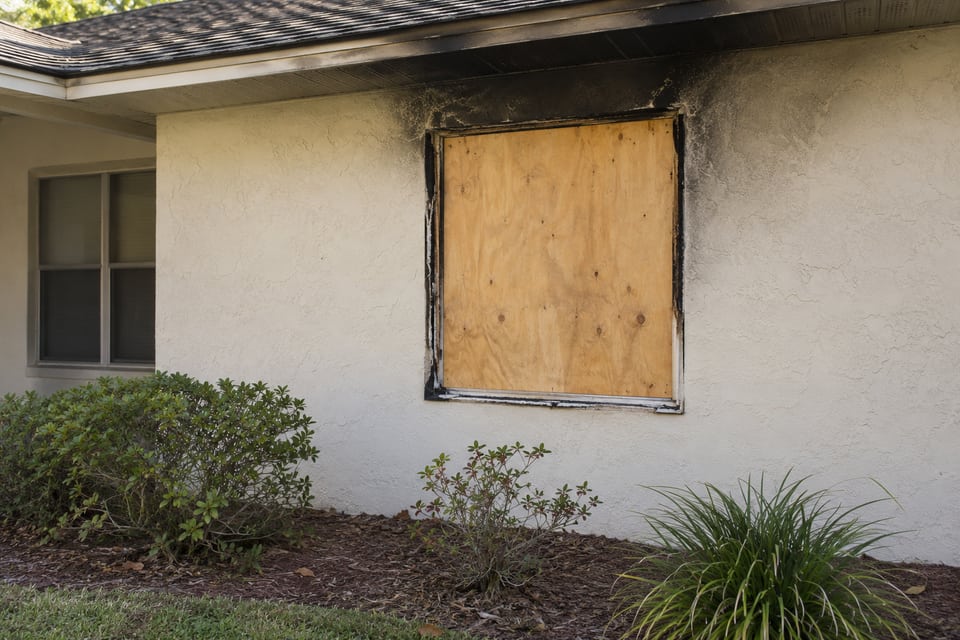
What should be settled before a damaged opening is covered?
First establish safe access and the right to approve the work. Then name each opening, the planned temporary protection and how the property will be accessed afterward. Permanent repairs need a separate scope.
Identify the opening from a safe position
A broken ground-floor window, a damaged door and an opening in a roof are not interchangeable jobs. Describe the opening, roughly where it is and whether it is visible from outside. Do not climb a ladder or cross a restricted area to measure it.
Firefighters may break windows or cut roof and wall openings while controlling a fire. The U.S. Fire Administration notes that boarding doors or windows may be needed afterward to restrict entry. That does not mean every opening can be covered in the same way, or that the rest of the building is sound.
Keep security, weather exposure and full repair as separate concerns. A temporary closure should have a clear purpose. It is not evidence that the building is safe to occupy or ready for rebuilding.
U.S. Fire Administration
Clarify who can authorize and enter
Have the property address and the owner's or approved manager's contact details ready. If you rent, notify the owner or manager before arranging work on the building. Say if the fire department limits entry. Mention any ongoing inquiry that keeps part of the site closed.
In a shared building, say where the opening is. It may be part of one unit, a shared hall or an outside wall. Ask the owner or association who can approve work there. Permission to enter your unit does not mean you can change a shared part of the building.
Settle how a later inspection will take place. The person in charge of the home needs to know who can enter and how. Keep keys and entry codes out of public photos or messages.
- Name the opening and its location on the building.
- State whether safe access has been approved.
- Name gates, shared areas or other access controls.
- Explain whether the property will remain vacant.
Separate temporary protection from roof repair
Get a list of the openings to be covered. Ask which ones cannot be reached safely. A window board-up plan should not silently become a full roof or structural repair agreement. Roof work, rebuilding and wiring repairs each have their own rules. Check licenses and needed approvals for the work involved.
For a roof opening, ask who will assess access and the supporting structure before any temporary covering is planned. Leave climbing and roof-cover work to someone who can check the risk on site. No one can judge by phone whether a roof can bear a person or tools.
Check what the price includes: materials, access equipment, removal of the temporary protection and any return visit. If weather changes the plan or exposes another opening, document that separately. Never treat a short description such as “secure property” as a complete list of work.
Plan the handoff to inspection and repair
Keep before-and-after photographs that can be taken safely, the written scope and the invoice. Record any opening left untreated and the stated reason. Check with your insurer about documentation and who pays the costs; temporary protection does not establish insurance coverage.
For later repairs, use the full address to find the right building office. The county issues permits for areas outside city and village limits. Fort Pierce and St. Lucie Village handle permits within their own limits. A Fort Pierce mailing address alone does not settle that question.
Before full repairs begin, check who will look up permit needs. Confirm who will do the work and arrange any required inspection. A temporary covering is one step in protecting a damaged property. It does not replace the repair or the approvals needed afterward.
St. Lucie County
Questions about this work
Can a boarded property be occupied?
Boarding an opening does not establish safe occupancy. Follow restrictions from the fire department and building authority, and obtain the required professional assessments before returning.
Is full roof repair included?
Do not assume it is. Check the exact temporary work and any exclusions. A permanent roof repair needs a separate assessment, a defined scope and verification of applicable licensing and permit requirements.