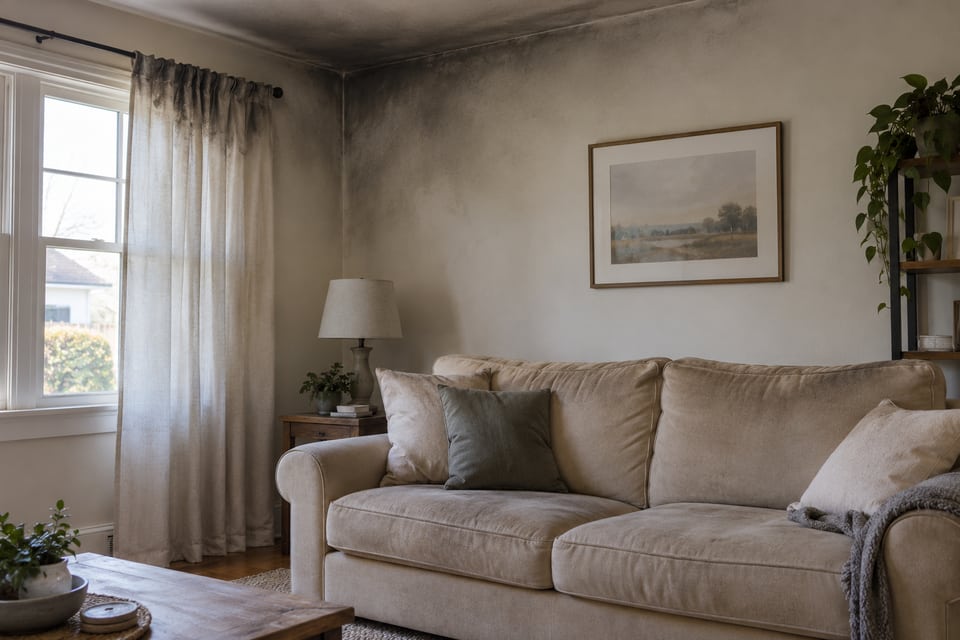
What if the strongest odor is in a storage area away from the fire room?
Describe that location and the items stored there without assuming how the odor arrived. Explain whether belongings were moved after the fire. The review should separate an original building concern from an item introduced later, rather than treating every space on the site as if it had the same exposure.
What to establish first
Prepare a location history for the most noticeable items or rooms. Include where a rug, box or piece of furniture was before the incident and where it is now, if known. An item’s current room is not necessarily evidence of where it was affected, and an uncertain history should remain marked uncertain.
If you have separate structures, label them clearly in your notes and record any different access restrictions. Do not enter an unreleased building just to compare odors. Also avoid using an appliance or air system that was isolated after the fire as a way to test where the smell appears.
Agree the cleanup scope
Ask the written plan to state whether it addresses the room, its contents or both. If the suggested next step is moving items, agree how their identity and destination will be recorded. Moving a suspected source without recording it can make a later comparison harder to interpret.
For any specialized treatment, request the method, occupancy controls and review criteria in writing. EPA names source control as a central approach to indoor pollution. A treatment name on a bill does not settle the result. You need to know which item was treated, what was done and whether it can be used again.
- Were any odorous items moved after the incident?
- Does the written plan cover contents, the building or both?
- How are remaining source questions recorded?
Local checks and the next decision
The west Fort Pierce label does not establish a building office. If work grows beyond cleaning, check the permit office for the address. Removing fixed parts, changing a system or repairing another building may need new approvals. Ask the right trade to explain the added work. Approval for odor treatment does not also approve building work.
When calling, separate the building in which the fire occurred from the place where the current concern is strongest. Explain any earlier treatment or contents movement. We can discuss the request around that history. No air-safety finding or treatment outcome can be made from the intensity of a smell alone.
www.slcfd.comU.S. Fire AdministrationSt. Lucie CountyU.S. Environmental Protection Agency