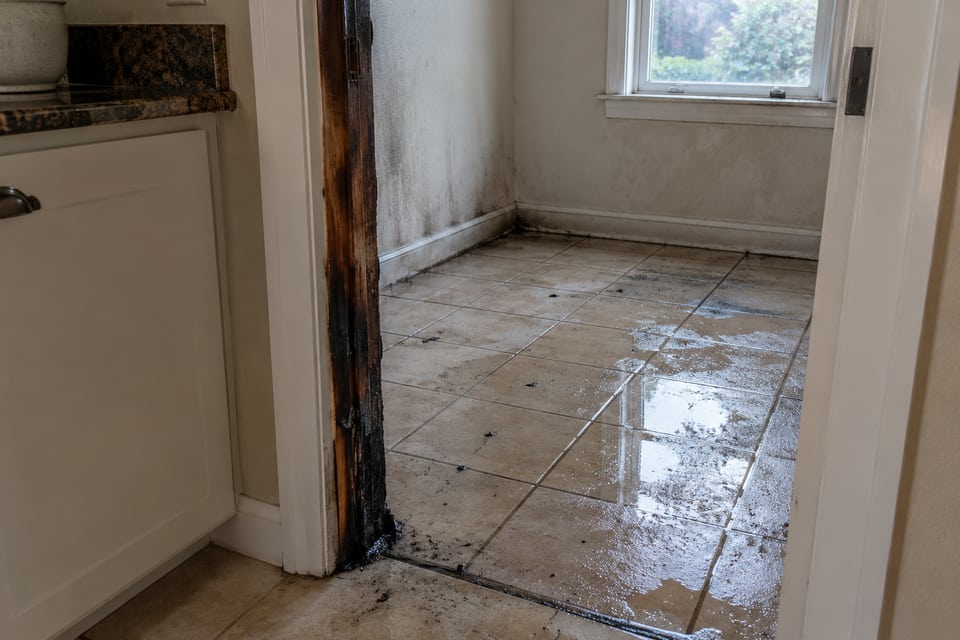
Can rebuilding begin as soon as the puddles are gone?
Removing standing water is only one decision. The condition of affected materials and evidence that they are dry enough for the next work also matter. Ask how those decisions will be checked and recorded.
Describe the water separately from the fire
Water used to fight the fire can leave rooms and belongings wet beyond the burn marks. Record which rooms were wet and when the water was first noticed. If rain entered through a damaged opening, or water is still coming from an unknown point, mention that as a separate concern. If water is still coming in, that needs attention too.
Do not label the water clean because it came from a hose. The U.S. Fire Administration warns that dirty water and soot left after a fire may harm your health. Leave handling and tool choices to someone who can check the site.
A dry-looking floor and a dry building are different questions. When a wet area is assessed, the scope should name the materials being checked, including any layers that cannot be judged from a surface photo.
U.S. Fire Administration
Make a list of wet materials
Use what you saw during a safe visit that was allowed. A rug on a hard floor, water along a cabinet base and a wet ceiling each raise a different access question. Keep them as separate entries instead of using one room total to describe the damage.
For a wet floor, ask whether the assessment covers the floor finish and the material beneath it. For a wall or cabinet, ask what can be checked without opening it and what would justify further access. You do not need to remove trim, lift flooring or drill into a wall to prepare for that conversation.
- List standing water, damp finishes and belongings separately.
- Note any area blocked by debris or a damaged ceiling.
- Record when water removal or drying equipment began, if known.
- Keep the names and dates of any earlier site checks.
Request a drying plan with a stopping point
A drying plan should name the areas it covers. It should say what may be kept and how progress will be checked. Ask where moisture will be measured. What result will show that the fans or other equipment can come out? The number of machines alone does not explain the condition of a wall or floor.
EPA advises prompt drying of wet materials to help prevent mold growth. That advice does not create a guaranteed completion time for a fire-damaged home. A sound time estimate starts with a site check. Safe access, what is wet and what is in the water all matter.
If water is continuing to enter through the roof or a broken window, resolve the temporary-protection question as well. Drying records should distinguish an original wet area from any later water entry. Otherwise a change in the condition can be mistaken for a completed task.
U.S. Environmental Protection Agency
Keep drying and rebuilding decisions distinct
The Red Cross says wet parts of the building need to dry fully before new finishes go on. Ask to review the drying result and the remaining material concerns before approving new flooring, drywall or paint.
Visible growth, a musty smell or suspected contamination should be reported for a separate assessment. EPA says not to run an HVAC system when mold contamination is known or suspected. Do not use fans or the central system as a trial to see whether an odor clears.
A water-removal and drying quote may leave out mold testing or cleanup. It may also exclude repairs to the wiring or building structure. Check which business will do each added task. Verify any license it needs. Keep equipment charges, removal work, disposal and rebuilding as named items when comparing estimates.
Questions about this work
How long will drying take?
A reliable time estimate needs an inspection. Ask what condition must be reached, how progress is measured and whether the estimate includes repeat checks. A fixed number of days is not a substitute for those details.
Does water damage mean there is mold?
Moisture creates a concern that needs prompt attention, but a wet patch does not establish a mold diagnosis. Report visible growth or a musty smell and check whether a separate assessment is needed.